Safety Benchmarks Linking Mobile Table Play to Layered Reward Structures Across Digital Platforms

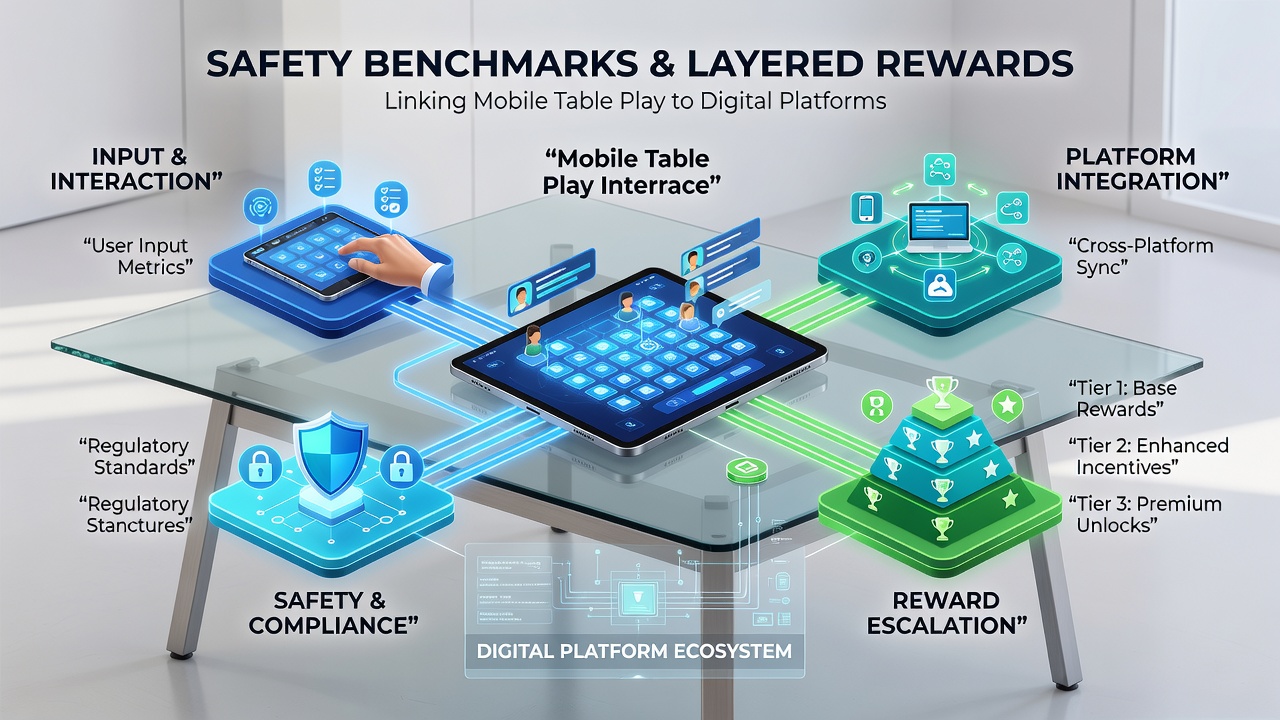
Digital platforms have expanded mobile table play options considerably in recent years, with operators integrating safety benchmarks directly into systems that manage layered reward structures for users engaging in games such as blackjack and roulette. These benchmarks typically encompass encryption standards, identity verification protocols, and real-time monitoring tools that align with reward mechanisms including tiered loyalty points, bonus multipliers, and access privileges to exclusive tables.
Core Elements of Safety Benchmarks in Mobile Environments
Regulatory frameworks across multiple jurisdictions establish baseline requirements for mobile table play, and data compiled through 2025 shows consistent application of multi-factor authentication alongside transaction logging that feeds into reward calculations. Operators apply these measures uniformly so that participation in secure sessions automatically contributes to reward accumulation without separate tracking layers, which reduces discrepancies and maintains audit trails that external reviewers can access on demand.
Studies conducted by independent research institutions indicate that platforms incorporating end-to-end encryption for live dealer streams achieve higher compliance scores when cross-referenced against reward program integrity metrics. In practice this means users who complete verified sessions on mobile devices receive prompt crediting of loyalty benefits while the underlying security architecture prevents unauthorized alterations to point balances or eligibility status.
Integration Patterns Between Mobile Table Access and Reward Layers
Layered reward structures often operate through progressive tiers where initial welcome incentives transition into ongoing benefits tied to table game volume and safety compliance markers. Observers note that many systems now embed safety checkpoints at each reward threshold, requiring periodic re-verification of device integrity or session authenticity before advancing a user to the next benefit level. This approach creates a continuous feedback loop in which secure play directly influences reward progression rates across digital environments.
According to figures released by the Nevada Gaming Control Board, mobile table activity accounted for measurable portions of overall platform engagement through early 2026, with reward redemptions showing strong correlation to sessions that met elevated security criteria. Platforms achieve this linkage by synchronizing game servers with loyalty databases so that every authenticated hand or spin updates both security logs and reward ledgers simultaneously.
Developments Observed Through Mid-2026
By June 2026 several major operators had implemented enhanced benchmark protocols that specifically address cross-platform consistency for mobile table users. These updates include standardized APIs allowing reward systems to pull verified safety data from multiple game providers without exposing sensitive user information. Industry reports highlight that such integrations have streamlined bonus eligibility reviews, shortening processing times while preserving the integrity of layered incentive programs.
Researchers examining platform data from various regions have documented how safety benchmarks reduce instances of reward manipulation attempts, particularly in environments where mobile access intersects with live dealer offerings. The resulting stability supports sustained user participation because reward structures remain predictable when built upon verified play records rather than isolated activity metrics.
Regional Regulatory Influences on Benchmark Application
Different regulatory bodies apply comparable yet distinct safety requirements that shape how rewards connect to mobile table play. For example, frameworks overseen by authorities in Australia emphasize responsible gaming markers that feed directly into loyalty program restrictions, whereas Canadian provincial regulators focus on data residency rules affecting how reward histories are stored alongside game logs. Operators adapting to these variations maintain unified internal benchmarks that satisfy multiple jurisdictions simultaneously, allowing seamless reward delivery regardless of user location.
Trade associations such as the American Gaming Association have published summaries showing that platforms adopting unified safety-reward linkages report fewer compliance incidents during periodic audits. These patterns emerge because benchmark data serves dual purposes: satisfying regulatory oversight while powering accurate reward tier assignments based on authenticated mobile sessions.
Technical Mechanisms Supporting the Linkage
Backend architectures typically employ event-driven architectures where safety verification events trigger corresponding reward updates through secure messaging queues. This design ensures that interruptions in mobile connectivity do not compromise either security records or accumulated benefits, because state information persists across sessions. Developers incorporate checksum validations and timestamp synchronization so that reward calculations reflect only those table plays meeting predefined benchmark thresholds.
Case examples from operational platforms demonstrate that users advancing through reward layers after completing safety-verified mobile table sessions encounter fewer account review delays. The linkage therefore functions as both a protective measure and an operational efficiency tool, with data flows designed to handle high volumes of concurrent mobile interactions without degradation.
Conclusion
Safety benchmarks continue to serve as foundational connectors between mobile table play activities and the layered reward structures deployed across digital platforms. Evidence from regulatory filings and platform performance data through June 2026 confirms that integrated approaches yield consistent outcomes in compliance adherence and reward accuracy. As operators refine these connections further, the emphasis remains on maintaining synchronized systems that support secure participation while delivering structured benefits based on verified engagement patterns.