Linking Assessment Frameworks to Entertainment Options and Privilege Structures Across App-Driven Gaming Landscapes
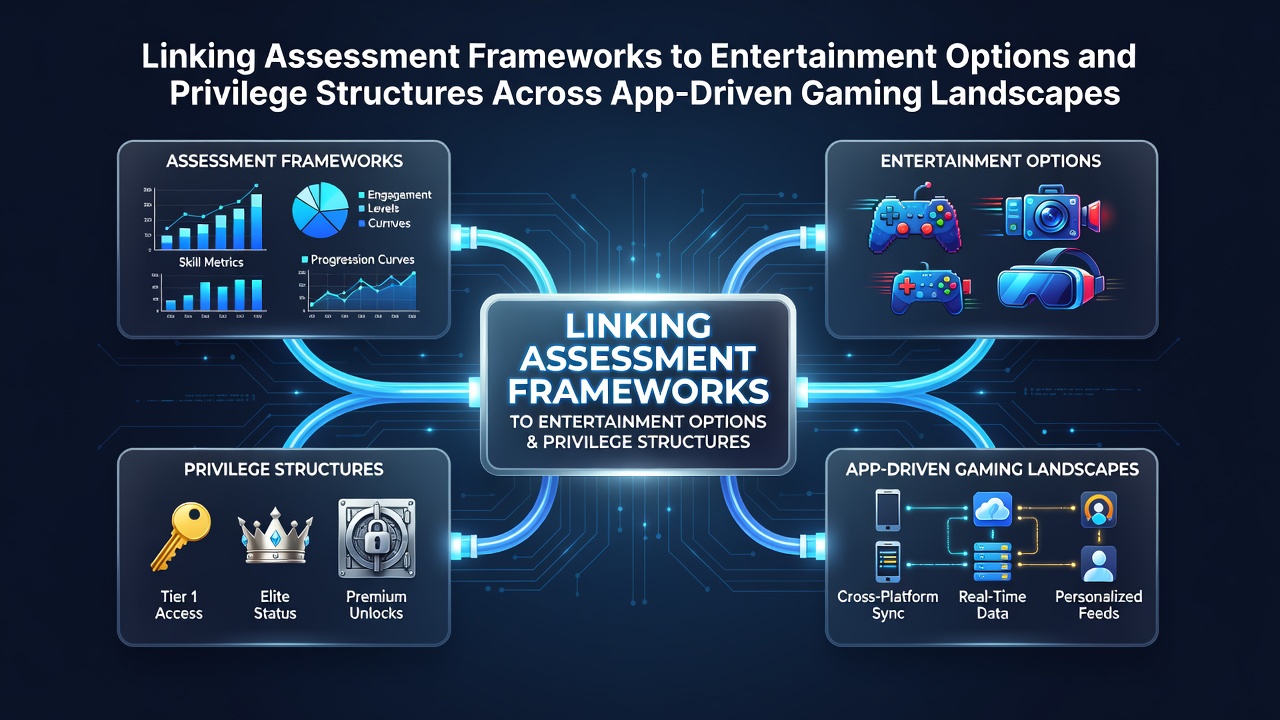
Assessment frameworks in digital gaming environments serve as structured evaluation systems that connect user ratings, safety benchmarks, and performance indicators directly to available entertainment choices and layered privilege mechanisms. These frameworks operate through data aggregation from multiple sources including regulatory compliance records, user interaction logs, and platform performance metrics, which then shape how participants access specific game types on mobile applications.
Core Components of Assessment Frameworks
Independent evaluators compile metrics such as payout verification rates, encryption standards, and operational transparency scores to produce composite ratings that influence platform visibility within app stores and recommendation algorithms. Data from the American Gaming Association indicates that standardized assessment protocols have expanded coverage to include real-time monitoring of mobile session integrity across multiple jurisdictions as of June 2026. These protocols integrate inputs from financial transaction audits alongside behavioral analytics, creating interconnected databases that link individual game offerings to tiered reward eligibility.
Privilege structures emerge when assessment outcomes determine access levels, wth higher-rated platforms unlocking progressive benefits such as exclusive live dealer tables, accelerated bonus accumulation, and priority withdrawal processing. Observers note that such linkages rely on algorithmic mapping where safety scores feed into loyalty program algorithms, automatically adjusting user entitlements based on sustained compliance with established benchmarks.
Connections to Entertainment Options
Entertainment selections in app-driven landscapes range from slot mechanics and table game simulations to interactive live dealer formats, each tied to assessment criteria that evaluate volatility patterns, return-to-player percentages, and session duration analytics. Platforms achieving elevated framework scores gain prominence in curated discovery feeds, directing users toward verified options while filtering lower-performing alternatives. Researchers at institutions tracking digital entertainment trends have documented how these connections streamline navigation, allowing participants to match preferences for game pace and theme with pre-vetted privilege pathways.
Turns out the integration extends further through dynamic updates, where quarterly reassessments can shift a game's visibility or associated rewards overnight, prompting developers to maintain consistent operational standards. Case examples from North American markets illustrate how assessment-linked catalogs have guided expansions in mobile blackjack variants and progressive jackpot networks, aligning content availability with regional regulatory thresholds.

Privilege Structures and Layered Access
Privilege architectures typically organize users into graduated tiers determined by cumulative assessment data points, including deposit consistency, engagement frequency, and adherence to platform policies. Higher tiers unlock enhanced entertainment access such as private tournament entries, customized game lobbies, and integrated payment solutions with reduced processing intervals. Industry reports from the European Gaming and Betting Association reveal that these structures correlate strongly with retention metrics, where participants advancing through tiers demonstrate prolonged platform engagement across portable devices.
Yet the linkage remains bidirectional, since entertainment performance feeds back into privilege calculations, adjusting tier status according to game-specific outcomes and overall platform reliability scores. This creates feedback loops that reward consistent interaction while enforcing accountability through periodic framework reviews. Those monitoring these systems observe that geographic variations influence implementation, with frameworks in Asia-Pacific regions emphasizing mobile-specific metrics like latency thresholds alongside traditional safety indicators.
Regional Variations and Data Integration
Frameworks deployed in different markets incorporate localized regulatory requirements, such as those outlined by the Nevada Gaming Control Board for North American operations or equivalent standards from the Australian Communications and Media Authority. These regional adaptations ensure that assessment outputs align entertainment catalogs with privilege features suited to local infrastructure and user demographics. Data integration occurs via secure application programming interfaces that aggregate cross-platform information, enabling unified views of how individual choices map to broader access privileges.
One documented instance involves mobile platforms adjusting VIP draw mechanisms based on aggregated safety evaluations, resulting in synchronized updates to both game selections and reward distributions. Such processes maintain operational continuity while responding to evolving compliance landscapes observed through mid-2026.
Conclusion
Linking assessment frameworks to entertainment options and privilege structures produces interconnected ecosystems within app-driven gaming environments, where evaluation outcomes directly inform content availability and tiered benefits. Continued refinement of these connections relies on sustained data flows from regulatory bodies, platform operators, and independent analysts, supporting consistent alignment across diverse mobile landscapes.